

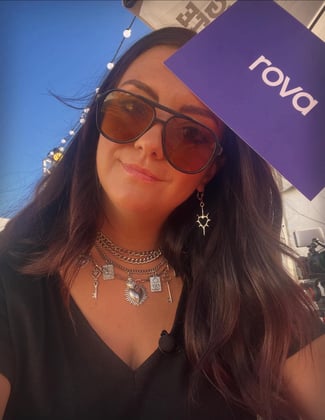
 Monika Barton, Editorial Chief at MediaWorks, highlights the importance of editorial quality, ethical judgment and audience-first storytelling in a fast-moving, multi-platform media environment. She reflects on a career shaped by writing, producing and presenting across Aotearoa’s media industry, and encourages emerging journalists to stay enthusiastic, embrace discomfort and remain open to every opportunity that helps build their craft. Monika also shares her pride in backing meaningful stories, developing new writers and contributing to a media landscape where strong relationships, curiosity and genuine connection continue to matter.
Hi Monika! Thanks again for speaking with me! First, can you tell me about MediaWorks?
Thanks for having me! MediaWorks is one of Aotearoa's biggest media companies – we have a bunch of iconic radio stations, a heap of incredible podcasts, and an ever-evolving website and app, rova, which is the digital sandpit that I play in each day.
rova connects with audiences through entertainment and lifestyle news, live-streaming radio, playlists, podcasts, video content, competitions, games, and pretty much everything in between.
What does your role as Editorial Chief in a broadcasting and audio-visual company entail?
Every day at work is different for me, which is one of the main reasons I love what I do. As Editorial Chief, my job is essentially to be the ultimate gatekeeper of quality, ethics, and vibes across all the content that populates our 'articles' section on rova.nz.
As well as sub-editing, mentoring new writers, developing editorial strategies, and making decisions about how we approach all kinds of stories and subjects, I still get to produce and publish my own features and news stories. I love doing sit-down interviews with actors and musicians, reviewing gigs and movies, and writing opinion pieces. When I'm really lucky, I'll fit in the odd travel story or overseas film junket. I also work closely with our integration team to help deliver sponsored content for a variety of very cool clients.
I hang out with lots of talented people who I get to collaborate with every day, thanks to our multi-platform offering here at MediaWorks. We're always teaching each other new things, which is especially useful for me when it comes to learning how to make TikToks and trying to get rid of my 'millennial pause' on camera.
You’ve also worked across various roles throughout the Aotearoa media industry. How have your roles across writing, producing and presenting prepared you for your current role?
My first proper gig in media was as a kids' TV presenter on the afternoon show Sticky TV, which was a great training ground for a lot of things at once. I learned about television production and being on set, presenting for camera, script-writing, editing, voice-over, and heaps more – including how to jump into a pit of mud without ruining your makeup.
Being a multi-hyphenate has been key to surviving in this industry, and I've carried on doing that in almost every job since. After studying communications at AUT, I won an internship at The Edge (within MediaWorks), where I did almost every job imaginable, from radio show producer to promotions coordinator to social media manager. That gave me an incredibly well-rounded view of the power of radio and its offshoots.
Funnily enough, the people I met in that job ended up bringing me back to MediaWorks a decade later, after I'd done my OE and truly learned how to be a journalist during my time in the newsroom as the Entertainment Editor at Newshub – a dream job to which I owe so much.
Can you tell me how you got your foot in the media industry door? Do you have any advice for young journalists/media professionals who are trying to break out in the industry, especially during a particularly volatile period?
I actually wrote in to be a part of the studio audience on Sticky TV as a precocious 11-year-old who just wanted to show off. I jumped around and made enough noise that they asked me to come back as a junior reporter, and eventually, I became a full-time host eight years later after sticking with it all the way through high school (despite the inevitable teasing that came with it).
I think that kind of shameless enthusiasm serves you really well in this industry. I still draw on my high tolerance for embarrassment and genuine passion for making content that informs and entertains – even, and especially, at my own expense – almost daily.
While I was at uni and waiting for a big writing break as a journo, I started my own blog with a cringe-worthy name, 'The Monicles'. It was objectively pretty terrible, but it's still exactly the kind of thing I'd encourage any keen writer to do.
Say yes to the opportunities that scare you the most, develop a thick skin, but wear your heart on your sleeve as often as you can. Be willing to wear many hats, including the ones you don't think suit you that well. And apparently, be very generous with your use of metaphors…
And please don't despair when one door closes. I've lost several dream jobs to layoffs and shutdowns in TV and journalism, and while I absolutely freaked out about never working again at the time, each ending eventually led me to a new, epic opportunity I could never have forecasted.
Finally, what’s something you’re especially proud of in your career so far? What’s it like working not just across roles but also over multiple outlets/publications in Aotearoa?
Getting a "good question!" from someone you really admire in an interview is just about the best feeling you can get as a journalist. Beyond that, I've been incredibly proud of the times I've fought for a risky story to get published, and it's paid off, or when I've backed myself on a controversial opinion piece that went on to really resonate with readers. Right now, I'm most proud of the team I work with. Seeing our new writers thrive and find their voices is the absolute best.
As for working across multiple outlets in NZ? It’s hilarious because the industry here is teeny-tiny. You will work with the same people five times over at three different companies under four different job titles.
That means it really pays to be kind and foster the relationships that come your way. People remember when you take the time to write a thoughtful response to an email or go out of your way to give someone deserving a pat on the back.
I've lucked out with so many workmates over the years who have become best friends. I reckon at least part of that is down to how NZ media maintains a lot of genuine heart and connection despite all its challenges. The other part of it is probably a shared love of the Japanese place up the road for lunch, and a fondness for an after-work wine.
About the Author
Darla Tejada
Share



 Top
Top