

In today's Spotlight, Medianet speaks to Jane Howard about her role as the Arts and Culture Editor at The Conversation. Having had a more unconventional media journey, Jane shares how she built a freelancing career through work in other arts organisations. Jane also reflects on the current crisis in art writing and criticism - how spaces for these forms of writing are disappearing - and what she hopes to see for and from art writers in the future. 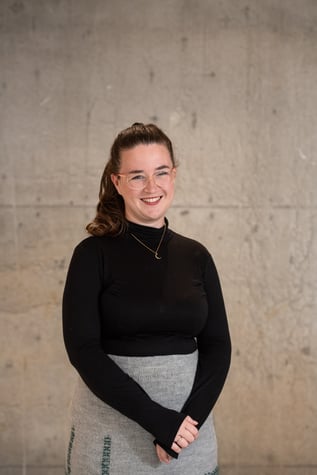
Hi, Jane - thanks again for speaking with me! I’m really intrigued by your career trajectory, and was wondering if you could speak a bit about how your freelance work, as well as your roles in various arts festivals and organisations, gives you a unique perspective on your work as the Art and Culture Editor at The Conversation?
Yes! I had quite a circuitous route to joining The Conversation. I didn’t study journalism at university, but when I was studying I started a theatre blog. I was lucky enough to draw the attention of some great editors who were keen to support a young writer, especially Amanda Pepe at the sadly now defunct Adelaide Review, who gave me my first professional assignments.
After that, I spent a decade freelancing, including being lucky enough to travel a lot around Australia, as well as to Singapore and the United Kingdom, to write about art. Through that process I saw a lot of amazing art, met lots of amazing people, and learnt so much about being an arts journalist and critic. I wrote about everything culture, from books to theatre to ice-cream, giving me a really strong base across the arts - freelancing forces you to have broad interests!
But it is hard to pay the bills as a freelance arts journalist, so I always had a day job. I worked for lots of arts organisations, including the Adelaide Film Festival and the Emerging Writers Festival; and worked as a research assistant on various arts management projects at three universities. This gave me a strong interest in not only the art we all get to experience in the audience, but also a really healthy perspective on things like arts workers and arts policy.
The Conversation is unique among Australian publications in commissioning articles from university academics. Can you give me a bit of insight into your media cycle and/or your day-to-day schedule at The Conversation?
In many ways, we’re just like any other news organisation: we start the day with a news conference to discuss what is happening, we commission stories from these conversations, and we pick up pitches. But the difference, of course, is that all of our authors have university affiliations. We’re looking for writers who have a strong research background in whatever they’re writing about - if they’re writing on their own newly published research, or are responding to the big political news of the day.
My days are a mix of fast-response pieces to the news, and longer-term planning – maybe it’s the 50th anniversary of a film in a few weeks, maybe I’m working on developing an article on embargoed research, maybe I’m arranging tickets to plays or exhibitions for our writers. It’s a mix of picking up pitches, and of trying to find the perfect academic for my own ideas.
The great joy of my job is then working with academics to edit their work to translate academic ideas into a really readable, accessible and compelling article.
As both a freelancer and an editor, what makes for a good pitch?
I’m looking for pitches that tell me something new, or that show me something from a new perspective. I like pitches that are sharp and to the point - while still being long enough to get across the major points and point of view, and to get a sense of the style of the writer. I want to know why this story, why now, and why you’re the one to write it. Being an editor has definitely made me a better pitcher!
Finally, what do you hope to see published more often in terms of arts writing and criticism?
Australian artists and journalists have been opining on the crisis in arts criticism since at least 1869 – I wrote about it for Meanjin in 2023. But I do think the crisis is getting more acute: we’re seeing less space for arts writing, and for criticism. The Walkley mid-year awards quietly folding their arts journalism and arts criticism prizes into one award was a blow to lots of arts journalists and critics as to how our craft is perceived by the industry.
When I started out, there were a lot of spaces for experimentation in arts writing, and I don’t see the space for that in the Australian ecosystem any more. I got my start in street press, and now they’ve shuttered. Almost all the theatre bloggers got burnt out and quit our websites. There are great young people doing brilliant arts coverage in newsletters and on social media, but I foresee history repeating itself and they’ll find they can’t sustain the work on their own.
So what do I want to see published more? Everything. I want space for more reviews, more features, more opinion writing. I think the arts are crucial to our lives - whether that’s reading high brow literature or watching comedy sketches on YouTube - and so it deserves considered analysis. And I want writers to be supported and to have platforms, so they can write about whatever they find exciting, so they can help me find my next favourite thing.
About the Author
Darla Tejada
Share




 Top
Top